

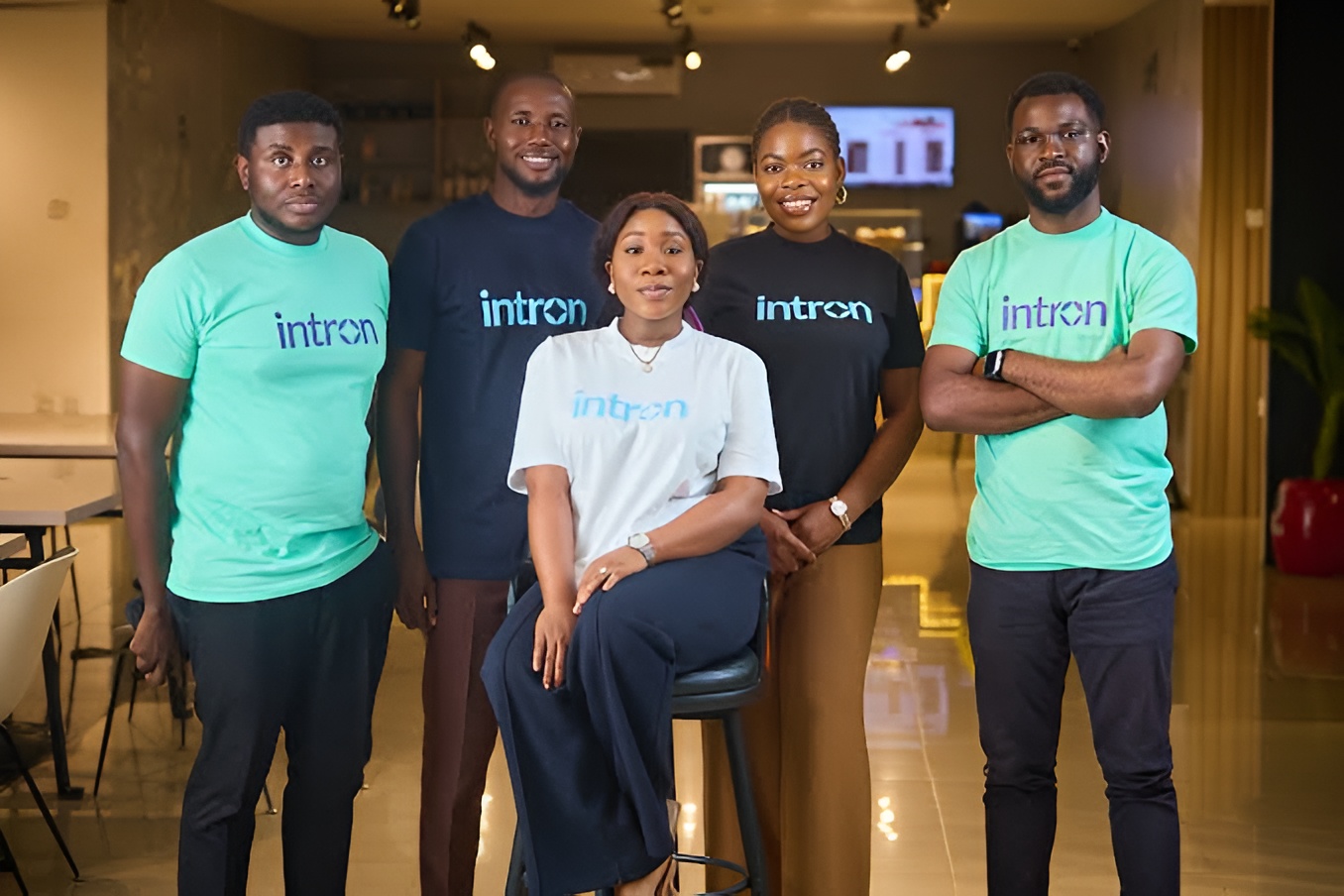
Nigerian voice AI company Intron has launched Sahara v2.5, an upgrade to its speech intelligence platform designed to handle a problem that remains difficult for many voice systems: conversations in which people move between languages during the same exchange.
The new release expands Sahara’s code-switching capabilities from the Swahili-English support introduced with Sahara v2 to 12 African language pairs. It also adds multilingual speech generation, a trilingual Kinyarwanda-English-French model and seven additional African languages, according to Intron.
The launch was announced on August 26 at the Deep Learning Indaba in Lagos, where Intron is also running the Sahara CodeSwitch Africa Challenge for developers building applications around multilingual African speech. Independent technology publications including Techpoint Africa and Technext have confirmed the release and its focus on African code-switching.
Code-switching is common in many African conversations. A speaker may move between English and Yoruba in Nigeria, English and Swahili in Kenya, or other combinations depending on the setting and the people involved.
Traditional speech-recognition systems can lose words or context when the language changes mid-conversation. Intron’s previous Sahara v2 release addressed this problem for Swahili and English; Sahara v2.5 extends the approach to 12 bilingual combinations, including Hausa-English, Igbo-English, Pidgin-English, Yoruba-English, Zulu-English, Luganda-English, Wolof-English, Afrikaans-English and Amharic-English. The platform also lists Kinyarwanda-English-French as a trilingual configuration.
Intron says Sahara v2.5 can maintain conversational context when a speaker switches between Kinyarwanda, English and French without requiring the system to reset between languages. The company describes this as its first African trilingual speech-recognition model.
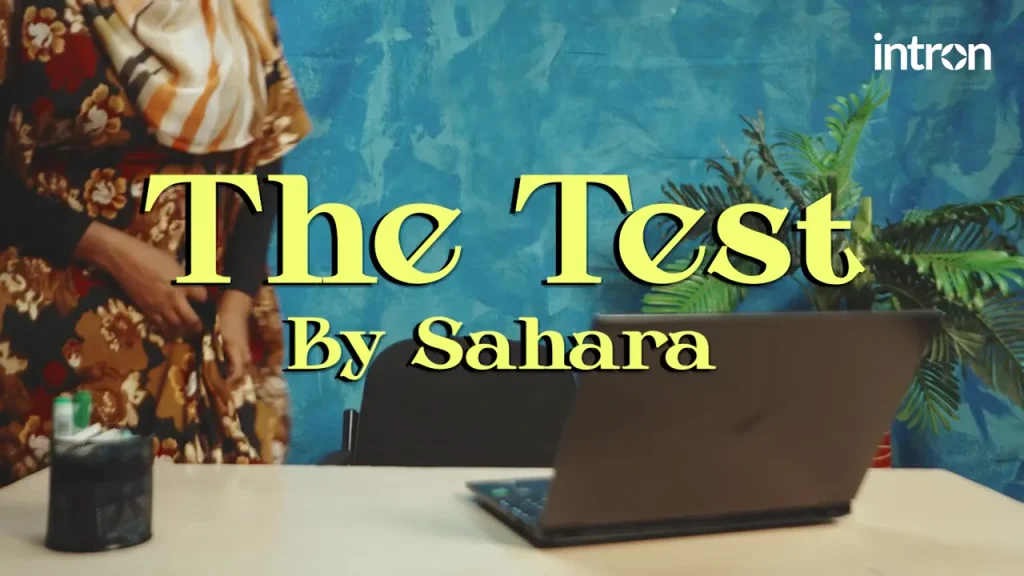
The release also adds speech recognition for Nupe, Kanuri, Nigerian Fulfulde, Tigrinya, Kikuyu and Dholuo, with Intron’s current materials also listing Somali among the newly supported languages. These additions bring the platform’s African-language speech-recognition coverage to 31 languages, according to the company and independent reporting.
Intron separately says Sahara now supports 63 languages overall, up from 56, following the addition of seven languages. The distinction is important: the 12-language figure refers specifically to bilingual code-switching support, while the larger number refers to the platform’s broader language coverage.
Sahara v2.5 also expands Intron’s text-to-speech capabilities. The company says its voice-generation system can produce speech in 13 languages while supporting language mixing, allowing developers to build voice agents that do more than simply transcribe multilingual conversations.
The company is positioning the technology for applications including customer support, healthcare documentation, financial services, legal services, education and agriculture. Its platform already has deployments involving organisations in healthcare, courts and financial services, including Penda Health, ARM, Branch, Carbon, Data.FI and state high courts across several African countries.
One example highlighted by Intron is the Ogun State Judiciary in Nigeria, where the company says its technology has expanded from three pilot courts to nine, with the potential to reach all 18 courts in the state. The company says Yoruba is frequently used during testimony, making multilingual transcription particularly relevant to courtroom records.
In healthcare, Intron says a 14-minute Swahili-English consultation in Nairobi can be converted into a structured clinical note in less than 30 seconds. It also cites an offline medical-scribe deployment at PAMO Clinics in Nigeria that has processed more than 2,000 consultations and produced a fourfold improvement in documentation speed. These are company-reported deployment figures rather than independently audited performance measurements.
Intron has published preliminary benchmark results comparing Sahara v2.5 with other speech models on African code-switched speech. The company’s test uses word error rate (WER), where a lower percentage represents fewer transcription errors.
Across 12 African languages, Intron reports an average WER of 34.3% for Sahara v2.5, compared with 53.8% for Gemini 3.6. The company’s published table also compares Sahara with ElevenLabs and Meta’s Omni ASR on individual languages.
Those results should be treated as company-published benchmark claims rather than a definitive independent ranking of voice models. Intron’s benchmark methodology references the IJCNLP-AACL 2025 AfriSpeech MultiBench work and African code-switching datasets, while separate research published in 2026 has highlighted the broader difficulty of evaluating speech models in noisy, real-world African environments.
There is some independent evidence supporting the direction of Intron’s work. In a benchmark conducted by Gooey. AI for the Gates Foundation and CLEAR Global, Intron says Sahara performed better than alternative transcription systems on five of seven Nigerian languages tested. Again, the result is reported by Intron and should not be treated as a universal performance ranking.
The release comes as African startups increasingly build AI systems around the continent’s linguistic and operating conditions rather than adapting products designed primarily for high-resource languages.
Intron began in healthcare, developing clinical documentation tools before expanding into voice infrastructure for courts, financial services, call centres and other enterprise applications. In March, TechCabal reported that Sahara v2 had reached 57 languages, including 23 African languages, and more than 500 African accents.
That progression reflects a broader commercial challenge. Supporting more languages is not enough if voice systems cannot handle accents, background noise, domain-specific terminology or the way people actually combine languages. A speech model that works well in controlled, single-language recordings can still struggle when deployed in a busy clinic, courtroom or call centre.
Intron’s strategy is therefore moving beyond language coverage toward what it calls speech intelligence for real-world African conversations. Sahara v2.5 adds streaming speech-recognition and speech-generation endpoints, allowing developers to build applications that process speech while a person is still talking and begin generating responses before an entire response has been produced.
The release is being accompanied by the Sahara CodeSwitch Africa Challenge, which gives developers access to Intron’s code-switching APIs and asks them to build applications across healthcare, legal and public services, fintech and customer experience, agriculture, education and other sectors.
The challenge has a $10,000 cash prize pool and is designed to test how multilingual voice AI performs in practical African use cases rather than only in laboratory benchmarks. Intron says registration opened in August, with winners scheduled to be announced on October 1, 2026.
For Intron, the larger bet is that African voice AI will not be defined simply by how many languages a model can recognise. The more difficult question is whether AI can follow the way people actually speak, across languages, accents, background noise and changing conversational contexts, and turn that understanding into useful products.
Sahara v2.5 represents the company’s latest attempt to close that gap. Whether the model’s benchmark advantages translate consistently into production environments will depend on independent testing, broader deployments and how reliably developers can build on the technology at scale.